

We’re back by popular demand! And we’ve added new breakout sessions!
How can educators, architects and designers support learning and well-being through simple and low-cost designs? This free interactive workshop will feature key ideas from the Faculty of the Learning Environments for tomorrow (LEFT) Institute, founded at the Harvard Graduate School of Education and Harvard Graduate School of Design.
An opening talk will offer participants an overview of key conditions for learning and well-being – senses of agency, belonging, curiosity, satisfaction. –and qualities of spaces, materials and objects that support them. Participants will choose a parallel break out session moderated by distinguished practitioners that will offer practical and low-cost strategies for supporting learning and well-being in a variety of school settings.
Here are the descriptions for each of our breakout sessions:
Our Innovators' Compass: How we make—and hack—stuff better
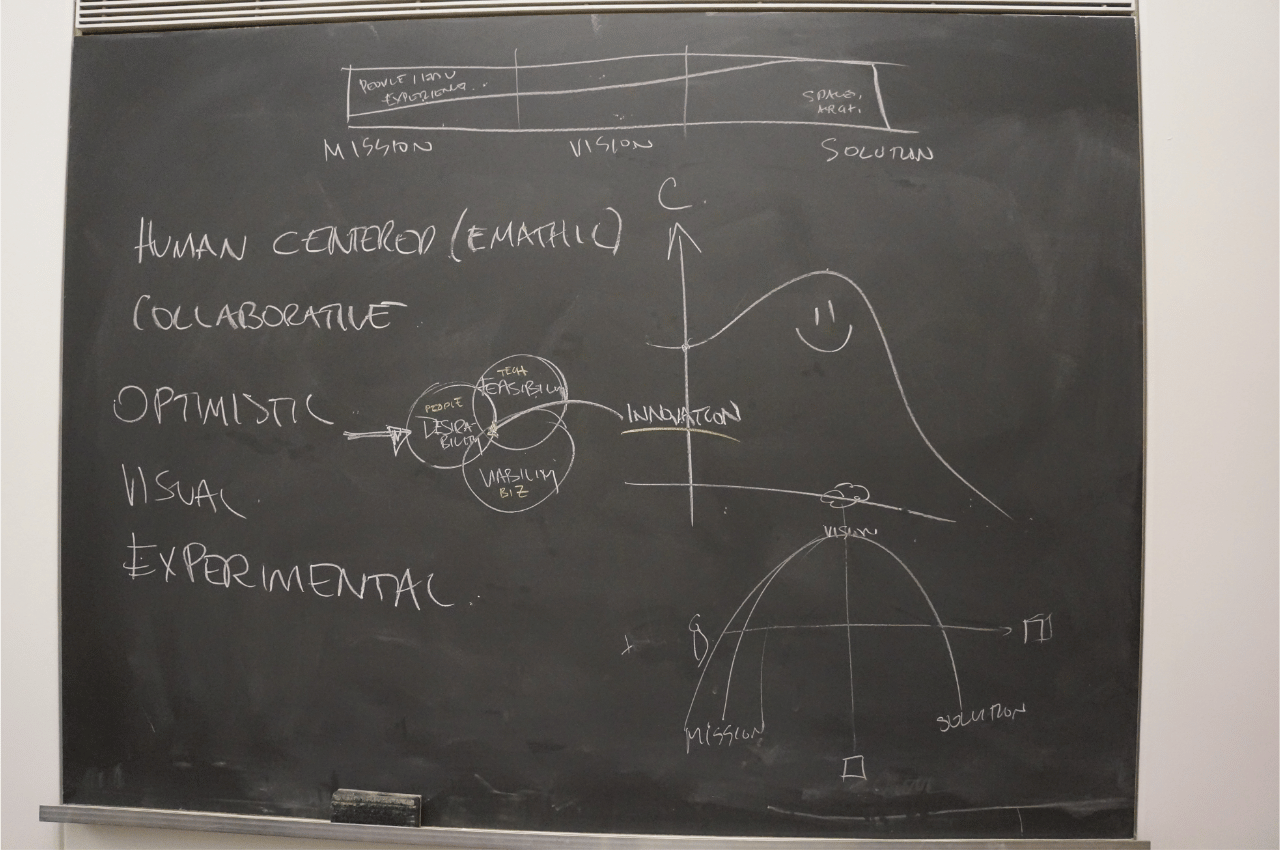
Got a student or staff space you’d like to hack? In this all-hands-on session, you’ll see your space, the people in it, and the potential in both in entirely new ways—then crowdsource hacks to support the space and people with stuff on-hand. You’ll use thought-and-action-provoking questions, punctuation marks, and human tools with peers here, which you can use to make anything better with students/staff at your school.
Ela Ben-Ur – Creator, Innovators’ Compass & Faculty, Olin College
Overlooked Spaces: Making micro-changes for major impact
School is full of spaces we hardly notice.
We spend lots of time getting the classrooms right, and the gym, and the auditorium. But what about the hallways? That space in front of the lockers? (Consider, too, how often it’s these same overlooked spaces that matter so much to students: how much of their life in school plays out across these small stages.)
So how might we take full advantage of the opportunity posed by these overlooked spaces—amplify the potential energy that’s already present and get some big bang with just a few bucks? Make them crucial parts of the experience we’re creating for students, teachers and everyone else who spends their days in our building? So that these small spaces serve as one more way we help students grow into the graduates we hope they’ll become—and teachers, to do the kind of teaching we hope to see.
This workshop isn’t just for schools in the middle of planning a new building. It’s also about using space design as a form of professional development. The “designer’s mindset” we build by solving space problems—the habit of identifying, observing and experimenting with the energy that already exists—is a tool to redesign all those other factors that shape what it’s like to learn and teach and connect and belong within our schools.
Dan Coleman – Founder & CEO, Big Sky Blue
Transform your learning and learning environments through teams!
The three most revolutionary changes we can make in education don’t cost a penny. They include teaching in teams, thinking differently about how we use time for teaching and learning, and decluttering our learning environment to support all learners. This session will focus on the transformative impact of teaching and learning in teams and explore the impact on learning environments. We will share the protocol from our recent book teamED, and discover new ways of thinking about learning and learning environments.
Nick Salmon – Founder & President, Collaborative Learning Network
Rewilding Hacks: Building relationships with nature in any school
Rewilding isn’t simply about adding plants to a room or campus; it’s about reawakening our innate relationship with the living world. Even in the most urban or indoor settings, we can cultivate moments that invite attention, awe, and reciprocity. This workshop invites participants to explore how small sensory experiences, mindful design choices, and place-based rituals can reawaken a school community’s relationship with nature and bring calm, joy, and focus into learning environments.
Staci Jasin — Executive Director, COGDesign: Community Outreach Group for Landscape Design & Education Consultant, Insitu Schools
Designing for engagement on a budget
What spatial moves create engaging learning experiences when resources are limited? This session shares findings from 9 Brazilian universities that redesigned active learning classroom spaces—including two with zero budget. Based on direct feedback from students and educators, discover the 4 interventions that had the biggest impact on learning. Walk away with a practical framework you can implement immediately in your own setting.
Patricia Nobre — Principal & Studio Director, Gensler
LEFT examines how contemporary forces – such as generative technologies, shifting demographics, and climate change — are shaping how and where learning happens. Designing effective schools and other learning places amidst such shifts requires a clear participatory process that explores several key questions:
What are the learning needs, values, and challenges of the people for whom you are designing?
What are the educational programs and purposes (e.g. the desired goals, skills, and dispositions) that will be most meaningful?
What architectural and design principles (e.g. flexibility, visibility, sustainability, etc.) can best support decision-making?
How can we best develop plans and prototypes that can be tested and improved over time?
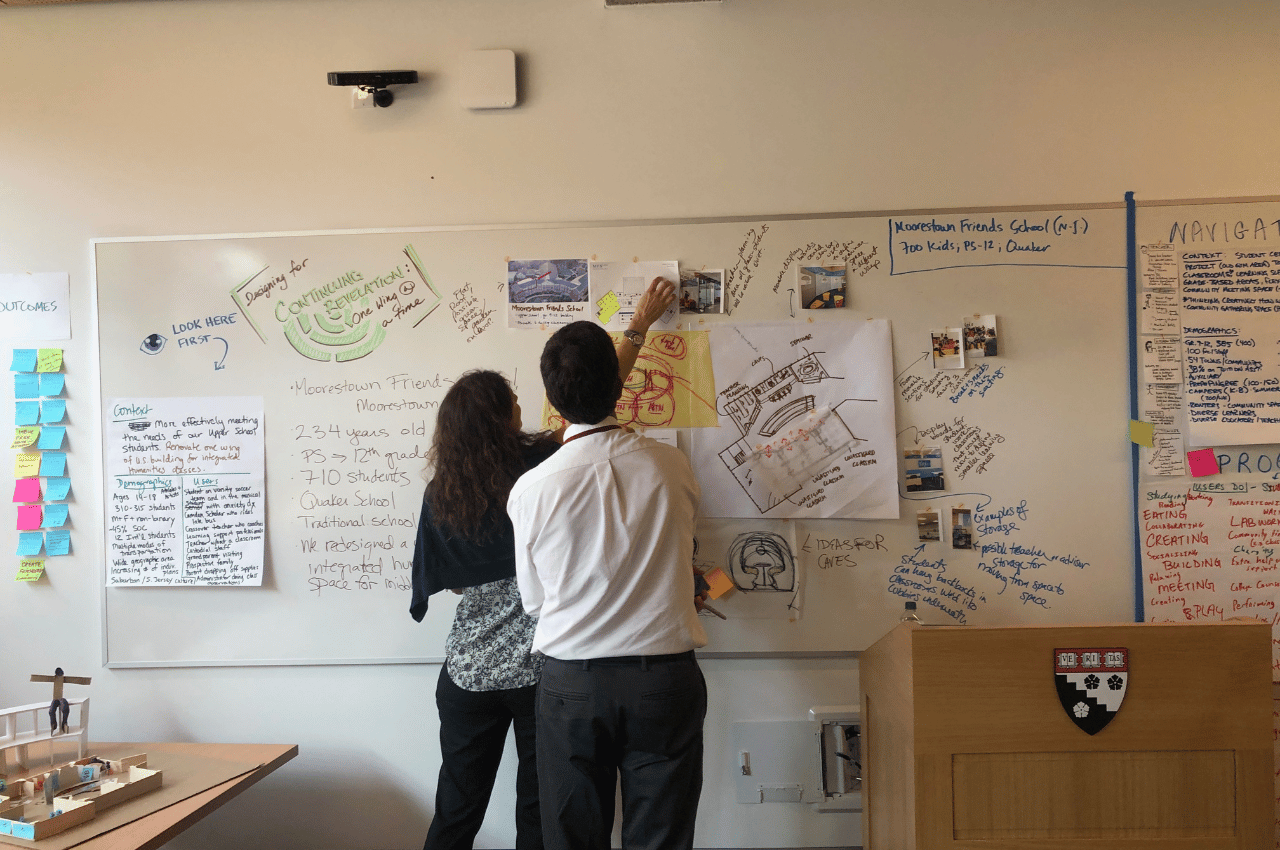
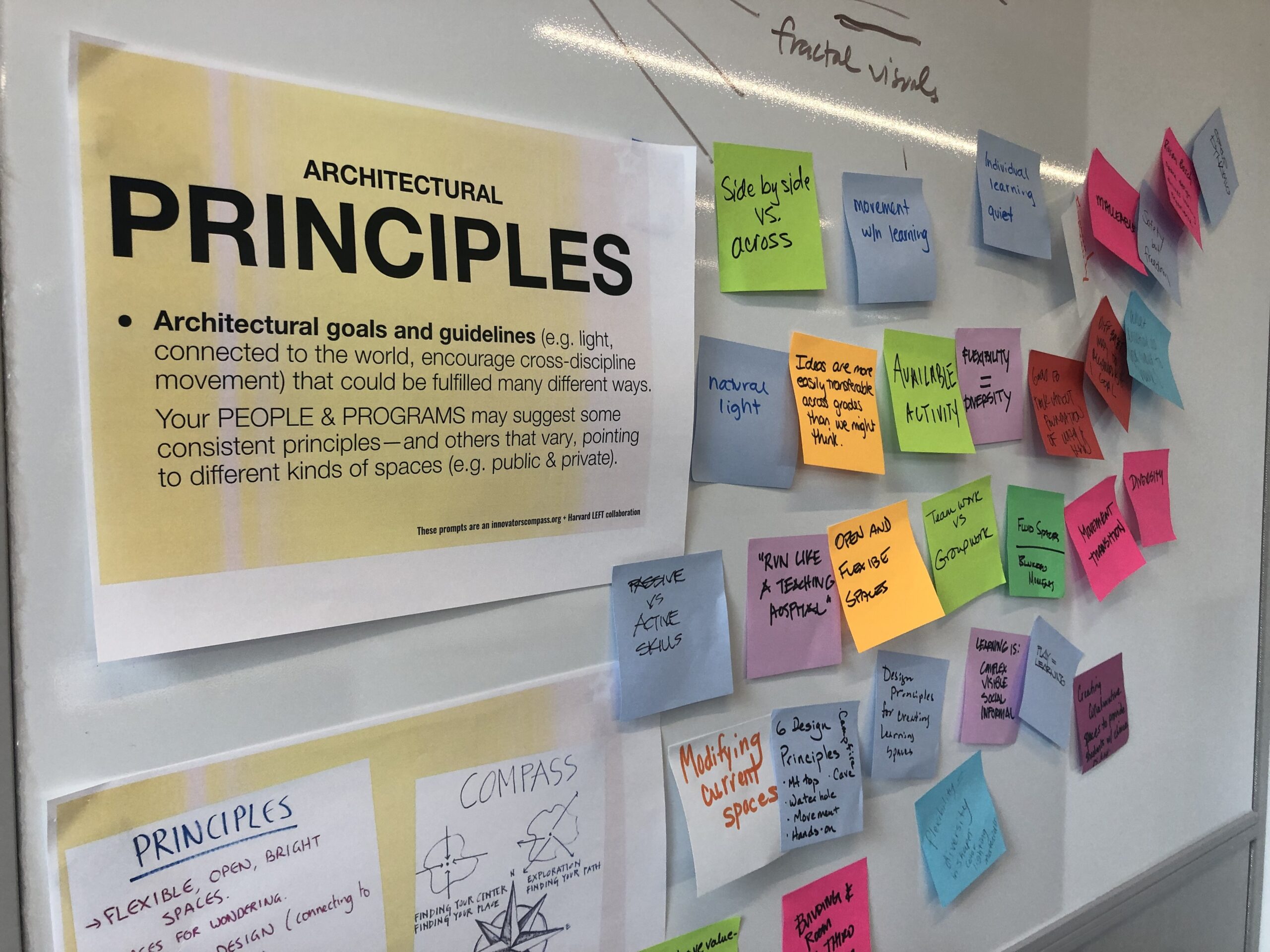
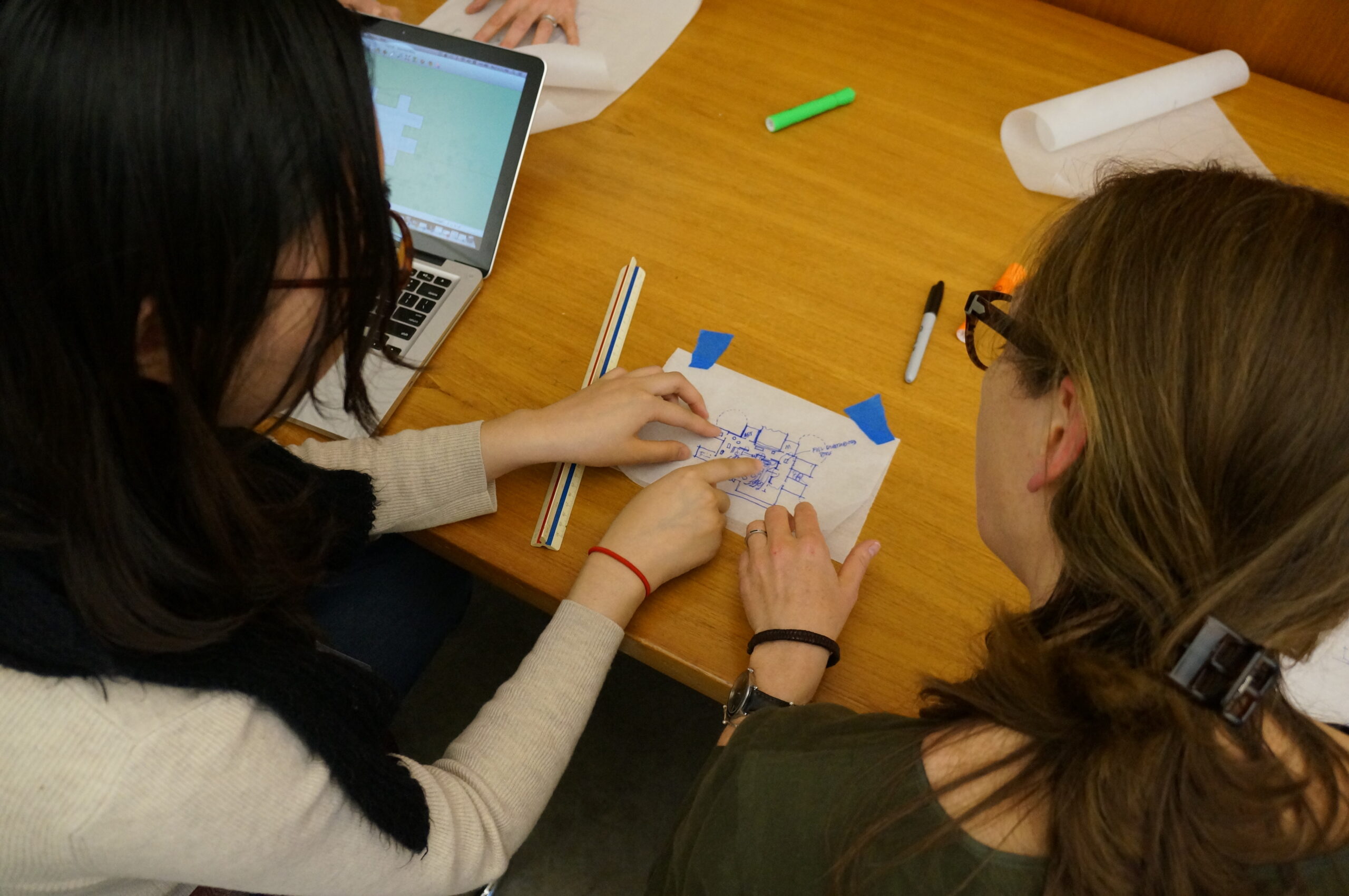
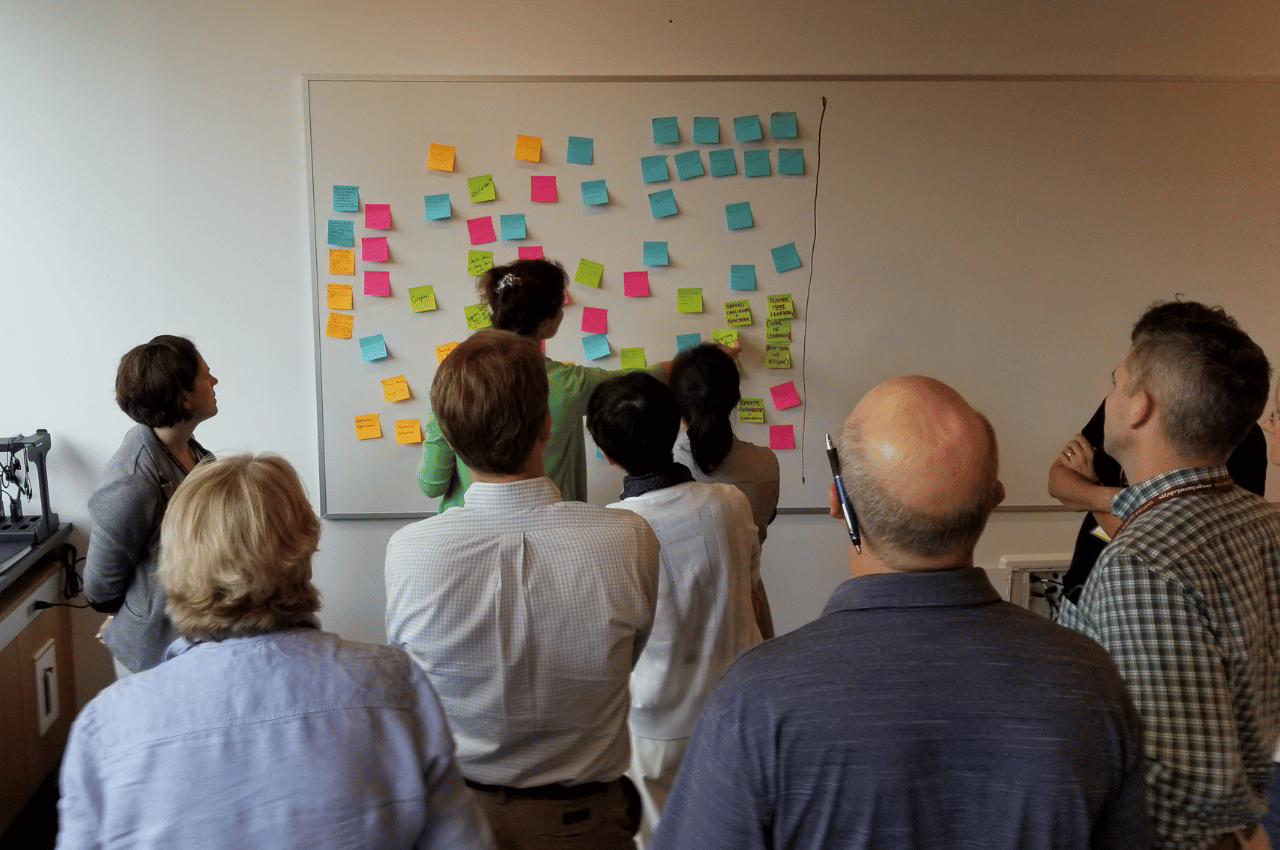

Overview
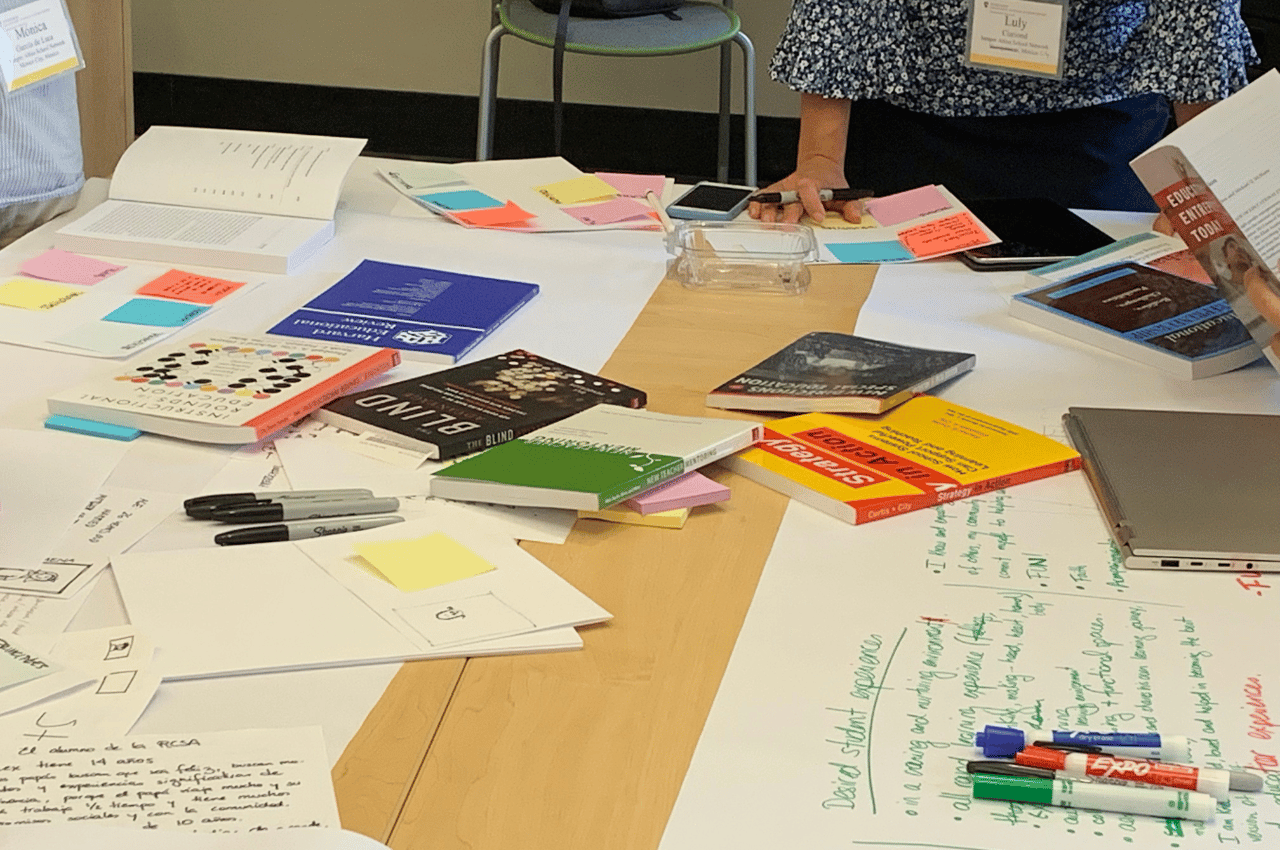
Founded in 2007 at Harvard’s Graduate School of Education and Graduate School of Design, the Learning Environments for Tomorrow (LEFT) Institute convenes individual practitioners and project teams in an interactive and intensive one-and-a-half -day event in which participants learn from leading experts and apply lessons to their active projects – ranging from modest redesigns of small settings, to large school building renovations, to ambitious new construction and campus planning projects.
Who: LEFT is explicitly designed to engage and support individuals and teams of architects, educators, designers, educational planners, and leaders involved in active design or redesign projects.
What: LEFT offers a unique opportunity for individuals and school design teams to receive research-based ideas, expert feedback, and practical support. Participants enjoy keynotes from award-winning global architects and designers that feature examples and lessons learned from past projects. Hands-on workshops led by Harvard faculty, leading designers, and innovative architects offer opportunities to learn and practice techniques right away. Teams work alongside other teams to apply and adapt ideas into their plans in daily design studios facilitated by expert practitioners.
Inspired by examples and research, participants formulate their own answers to the foundational LEFT questions and develop the tools to effectively continue this exploration with their communities back home.
What participants have brought to past LEFT Institutes
- Themselves and/or a team of colleagues
- The desire to collaborate with experts and practitioners from around the world.
- A building or space design project, current or envisioned
- An appetite for experimentation (wherever you are in your project)
What past participants have come away with
- Research-based knowledge on how to design for educational purposes.
- Insights into effective architectural principles and plans that support learning.
- Tools and strategies for participatory design processes to use back home.
- A wealth of inspiring examples, resources, tools, and strategies for you and your community to draw upon.
Where: Importantly, LEFT also engages in, and draws wisdom from, the very locations in which it convenes. LEFT has previously convened on the Harvard Campus. In the years ahead, LEFT will be convening annually in equally inspiring locations around the world.
Please stay in touch with us to receive updates about this inspiring and one-of-a-kind event!
Institute Co-Chairs

Dr. Daniel Gray Wilson
Harvard University
Daniel is a Principal Investigator at Project Zero and Lecturer at the Harvard Graduate School of Education (HGSE). His current teaching and research explore the dynamics of collaboration and group learning, designing physical places that support learning, and adult learning and leadership in the workplace. He is a former Director of Project Zero (2014-2023) and Faculty Chair of Learning Environments for Tomorrow (LEFT). Since joining Project Zero as a researcher in 1993, Daniel has participated in dozens of research projects and collaborated with educators in a variety of countries and cultural contexts, including Australia, Brazil, Colombia, Denmark, Italy, Japan, South Africa, Spain, Taiwan, and the United States.
Read More
Daniel Wilson is the director of Project Zero at the Harvard Graduate School of Education (HGSE), where he is also a principal investigator, a lecturer on education at HGSE, and the educational chair at Harvard’s Learning Environments for Tomorrow — a collaboration with HGSE and Harvard Graduate School of Design. His teaching and writing explores the inherent socio-psychological tensions — dilemmas of knowing, trusting, leading, and belonging — in adult collaborative learning across a variety of contexts. Specifically, he focuses on how groups navigate these tensions through language, routines, roles, and artifacts.
This interest can be seen in three areas of his current work:
- Professional Learning in Communities: How do a variety of professionals come together to learn with and from one another? Currently Wilson directs the research of Project Zero’s “Learning Innovations Laboratory (LILA),” an interdisciplinary professional learning community that facilitates cross-organizational learning on contemporary challenges of human development and change in organizations. LILA involves top leaders from twenty global organizations such as the Cisco, Novartis, the CIA, Steelcase, and the US Army. Since 2000, LILA has conducted dozens of explorations into themes such as the emerging science of decision making, the future of learning, and leadership development.
- Learning & Leadership Behaviors in the Workplace: How do professionals develop and deploy actions that enable learning in their everyday work? Wilson co-authored the book, Learning at Work (2005), outlines practices that support formal and informal learning in the workplace. From 2007-2011 he was a Research Fellow at the acclaimed innovation design consultancy, IDEO, in which he studied and designed interventions to enhance the learning and leadership behaviors in their design teams. Additionally, he is currently co-directing the “Leading Learning that Matters”, a research project with 25 independent schools in Victoria, Australia that aims to document innovative school leadership practices that support 21st century learning skills.
- Making Learning Visible: How can teachers and students create new forms of learning in which their identities and their knowledge can be made more visible to themselves and to others? Wilson was the principal investigator on the “Making Learning Visible Project,” a project that engages pre-k through high school educators in adapting the Reggio Emilia pedagogical principles
Since joining Project Zero as a researcher in 1993, Wilson, has also participated on projects such as: “Teaching for Understanding” (1993-1996), “Understanding for Organizations” (1996-1999), “Teaching for Understanding in Universities” (1996-1999), “Wide World Project” (1999-2002), “Project-based Learning in After Schools Project” (2000-2002), and the “Storywork Project” with the International Storytelling Institute (2002-2004).
David Stephen
New Vista Design
David is a co-founder of the High Tech High network of charter schools and their principal architect. He has varied experience as a teacher, program manager, writer, curriculum developer, and teacher trainer. During the past 30 years, David has had the opportunity to work nationally with leading school reformers on a wide range of successful and cutting-edge curriculum and facility design projects, playing a key role in the creation and/or architectural design of over 100 dynamic schools across the United States and abroad. As a former public school teacher and a licensed architect, David brings a unique perspective on the design of innovative learning environments from the inside out.
Read More
David Stephen’s professional life straddles the worlds of education reform and architectural design. As an educator, he has 25+ years of experience partnering with some of the field’s visionaries, working with schools nationwide to imagine, develop, and implement innovative school programs. As a licensed architect, he has over 15+ years of experience facilitating the architectural programming and design of forward-thinking school buildings. Not surprisingly, important and interesting connections happen at the intersection of these two disciplines. David speaks the “language of education” and the “language of design.” This allows him to not only translate and interpret best practices in education and design for his clients, but to assist them in fully exploring the relationship between the two.
Through his work at New Vista Design, David spends approximately 30% of his time helping districts, schools, and teachers develop multi-year training initiatives in student-centered and inquiry-based curricula and programming. His experience as a teacher, program coordinator, and curriculum developer in a variety of project-based educational environments grounds this work. Another 60% of David’s time is focused on partnering with districts, schools, and architectural firms to help facilitate the design of dynamic and forward-thinking school buildings. In this capacity, David has had the opportunity to collaborate with many pioneering architectural firms and school networks, and has played a key role in the architectural design and/or renovation of over 100 elementary, middle, and high school facilities across the U.S. and abroad. His projects include the design of facilities for the highly acclaimed High Tech High network of schools, Da Vinci Schools, Denver School of Science & Technology, Harlem Village Academies and Oracle Design Tech High School.
Finally, David devotes approximately 10% of his time to engaging in research and advocacy efforts that aim to create and highlight best-practices and new models for school programs and buildings of the future. He has served since 2011 as the Co-Chair of Harvard Graduate School of Education’s LEFT (Learning Environments for Tomorrow) Institute, and regularly facilitates workshops for educational changemaking organizations and projects such as Schools That Can, the Deeper Learning Network, Agency by Design, Nellie Mae Education Foundation, and A4LE (the Association for Learning Environments).

Ela Ben-Ur
Ela supports educators and organizations making positive change with Design Thinking. Over 13 prior years at innovation firm IDEO, Ela was a design practitioner, project leader, team coach, facilitator for clients, and co-founder of IDEO’s Leadership Studio. Ela teaches courses from product design to life design
at pioneering Olin College, where she holds the title of Academic Partner. She has
led featured workshops at venues from MIT (her alma mater) to the National
Science Teachers’ Association, AIGA, International Development Design Summit,
and US Conference on AIDS.
Read More
With many co-experimenters, she developed
Innovators’ Compass (#innovatorscompass, innovatorscompass.org), a visual tool
used from preschools to companies and communities to creatively and
collaboratively navigate challenges. Ela’s daughters are her inspiration.