Designing Low-Cost Educational Spaces to Support Learning and Well-Being: A Free Virtual Interactive Workshop
Today’s educators are seeking innovative ways to support learning as well as well-being for students. The school environment has been said to be the third teacher and as such, can support innovation in learning in this way. Educator, philosopher, psychologist, and founder of the Reggio Emilia approach to early childhood, Loris Malaguzzi, put it this way, “There are three teachers of children: adults, other children, and their physical environment.” This workshop has a focus on the school environment.
Faculty of the Learning Environments for Tomorrow (LEFT) Institute, founded at the Harvard Graduate School of Education and Harvard Graduate School of Design, will be facilitating a free virtual interactive workshop on December 16th at 11:30 am – 1:00 pm US EST to introduce key design ideas for educators and architects to consider when thinking of designing supportive spaces for students. If you are an educator, architect, or designer of educational spaces and desire to best serve students, then this opportunity is recommended for you.
Opening Session
The opening session will feature Dr. Daniel Gray Wilson of the Harvard Graduate School of Education’s Project Zero Research Center. Dr. Wilson will outline the key conditions for learning and well-being, including creating a sense of agency, belonging, and curiosity that leads to inquiry. Additionally, information regarding the quality of learning spaces and the objects and materials that support these learning processes and goals will be presented.
Workshop Objectives
The primary goals and objectives of the workshop are to explore two provocations:
- Educators: How can I create a sense of agency, belonging, and curiosity to optimize learning and well-being through the design of the school environment?
- Architects and Designers: How can I use building and space design to support student learning and well-being?
Breakout Sessions
This workshop offers five Breakout Sessions for participants to choose from. Following is an overview of each session.
Designing for Engagement on a Budget
In this session findings from nine Brazilian universities that redesigned active learning classroom spaces—including two with zero budget will be shared. The four interventions that had the biggest impact on learning will also be revealed. Through this learning engagement, you will gain experience with a practical framework you can implement immediately in your own setting.
Low-to-No-Cost Hacks for Transforming Your School Facility
In this session, you will have the opportunity to discover smart, budget-friendly ways to transform your school or client’s school into a more vibrant, student-centered learning environment! Real-world examples will be shared to spark ideas for creating dynamic, engaging, and personalized spaces. You will engage with concepts that you can tailor to your own school environment or your client’s environment. You will leave with practical, ready-to-use strategies to bring your vision to life.
Rewilding Hacks: Building Relationships with Nature in Any School
In this session you will explore the ideas of rewilding far beyond adding plants to a classroom or school campus. Engagements leading to the discovery of how one can cultivate moments that invite attention, awe, and reciprocity whether in a suburban, the most urban, or indoor settings will be facilitated. Explorations will also uncover how small sensory experiences, mindful design choices, and place-based rituals can reawaken a school community’s relationship with nature and bring calm, joy, and focus into learning environments.
Space is a Lever: Everyday Experiments in High-Impact Learning
In this session, we’ll tackle a series of challenges that dare us to use a small set of elements within a sharp set of constraints to design deliberate learning experiences. Together, we’ll experiment with easy ways to tweak everyday school spaces (hallways, entrances, cafeterias, libraries) to develop agency, belonging, and curiosity. You’ll leave with a set of simple, low-cost hacks to try out in your own building right away, and get colleagues and students start thinking of physical space as a tool for learning—and not just its backdrop.
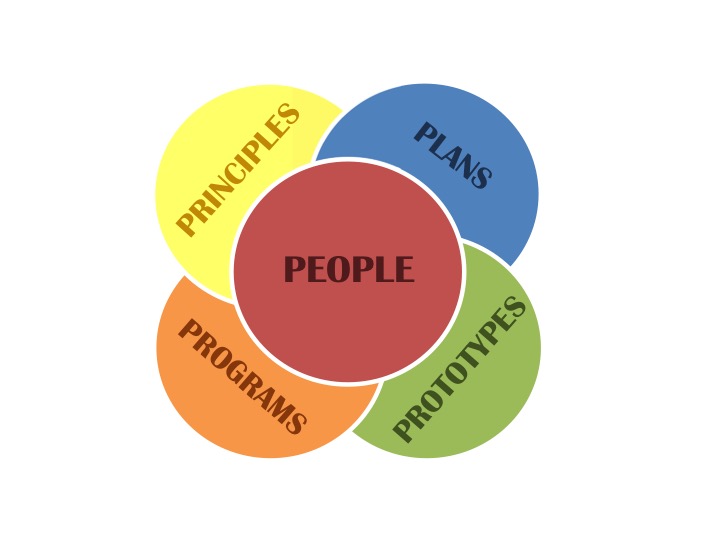
Our Innovators’ Compass: How We Make—and Hack—Stuff Better
Professional Growth
This virtual learning workshop experience will provide the landscape to collaborate and grow professionally with colleagues worldwide from the educational and building design careers areas. Gaining perspectives and knowledge from experts in a diverse setting can benefit your professional growth journey to better serve your school community and clients.
The IB has this description for a practice for creating learning environments that support student success in their Programme standards and practices document under the Environment, Student Support standard, “The school provides effective learning spaces and learning environments.” Determining what that practice can look like is essential knowledge for achieving this goal. The opportunity to empower designers of spaces that are effective for students is an endeavor that is worthwhile and much needed during our rapidly changing world.
How to Register for the Healthy Hacks for Schools: Low-cost designs for supporting learning & well-being in Schools Virtual Workshop
To sign up for this free workshop, simply click HERE. If you need help with your registration, our senior registration manager is available to assist you.