Understanding the IB Curriculum
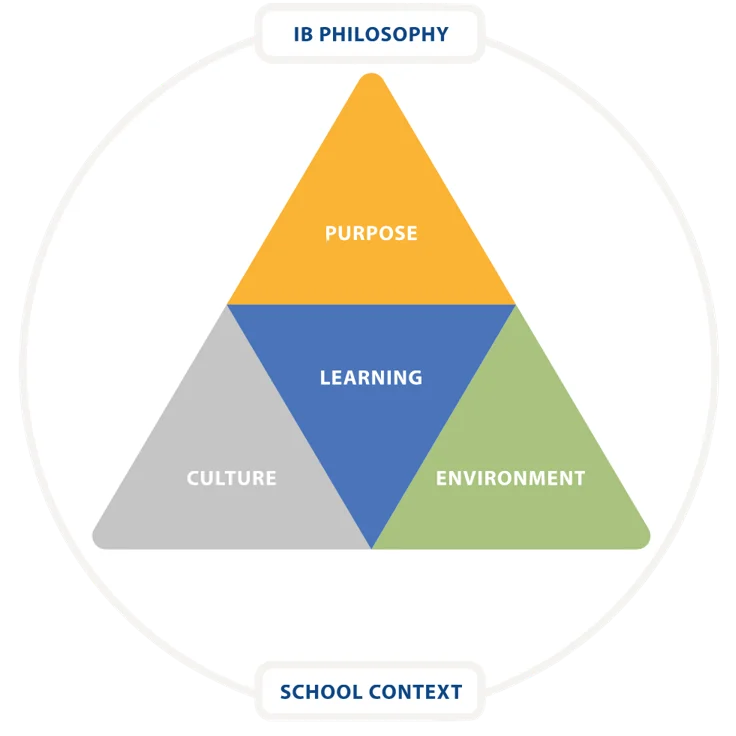
To understand the IB curriculum, it helps to start with a guiding question: what does a curriculum actually look like when it’s built to reflect the philosophy of an IB education? The IB answers this through a framework of key elements that shape curriculum design. Central to this is the concept of international-mindedness, a defining value of IB’s approach to global education, and the IB learner profile, which describes the attributes and ways of thinking that characterize an internationally-minded person. Taken together, the IB’s philosophy and its framework for teaching and learning form the foundation on which the curriculum is built.
What is the IB Curriculum?
The International Baccalaureate (IB) is a well recognized leader in international education. The IB curriculum is encapsulated within four IB programmes, the Diploma Programme (inaugural year 1968), the Career-related Programme (inaugural year 2012), the Middle Years Programme (inaugural year 1994), and the Primary Years Programme (inaugural year 1997). Each programme in the IB continuum has its own model, curriculum frameworks and guidance documents that aim to help IB educators develop inquiring, knowledgeable and caring people that contribute to a better world. This curriculum is embraced in more than 8,700 schools across over 160 countries to impact more than 1.95 million students! These students are empowered by their IB education to have ownership of their learning which is engaging, relevant, challenging, and significant in nature. The curriculum is flexible to accommodate each local schools’ unique context while providing the skills needed to make a positive difference in the world.
Structure of the IB Program
Several hallmark elements run throughout the IB continuum, all oriented toward fostering international-mindedness and a holistic approach to education. At the philosophical core is the IB Learner Profile, which defines the outcomes IB students are expected to work toward. Across all four programmes, the curriculum is inquiry-based, builds conceptual understanding, connects learning to local and global contexts, prioritizes removing barriers to learning, uses assessment to inform instruction, and incorporates collaborative learning and approaches to learning. The four programmes form a developmentally appropriate progression, each designed to meet students where they are while also fostering community engagement. Additionally, IB students are introduced to more than one language by the age of seven. The distinctive features of each programme are described below.
Primary Years Programme (PYP), Ages 3-12
The PYP framework is structured with six transdisciplinary themes used across all six subjects, language, social studies, mathematics, arts, science, and personal, social and physical education, to guide the design of units of instruction at each grade level. The units organize learning around an important idea to explore in authentic ways that engage students in wondering about the world in the local and global context. An example of how this might look in a transdisciplinary theme like How the world works, the unit might be designed to have students inquire to understand patterns, cycles, and systems.
In the final year of the PYP, students engage in the Exhibition, the celebratory culmination of their learning in the PYP. In the Exhibition, learners are involved in a real-world process of exploration of an issue that resonates personally with them.
Middle Years Programme (MYP), Ages 11-16
The MYP curriculum is interdisciplinary in nature and comprised of eight subject groups: language acquisition, language and literature, individuals and societies, sciences, mathematics, arts, physical and health education, and design. It builds on the knowledge and skills of the PYP and prepares students for the DP and CP. Through conceptual understandings and inquiry, students are encouraged to make connections across their subjects and the world.
There are two community engagements in the MYP known as the MYP Projects. The community project must be completed in year 3 or year 4 if the programme ends in one of these years. If the programme has a year 5, the students must complete the personal project. These projects are explorations that facilitate opportunities for students to engage in cycles of inquiry, action, and reflection, further develop the attributes of the IB learner profile, and show approaches to learning (ATL) skills.
Diploma Years Programme (DP), Ages 16-19
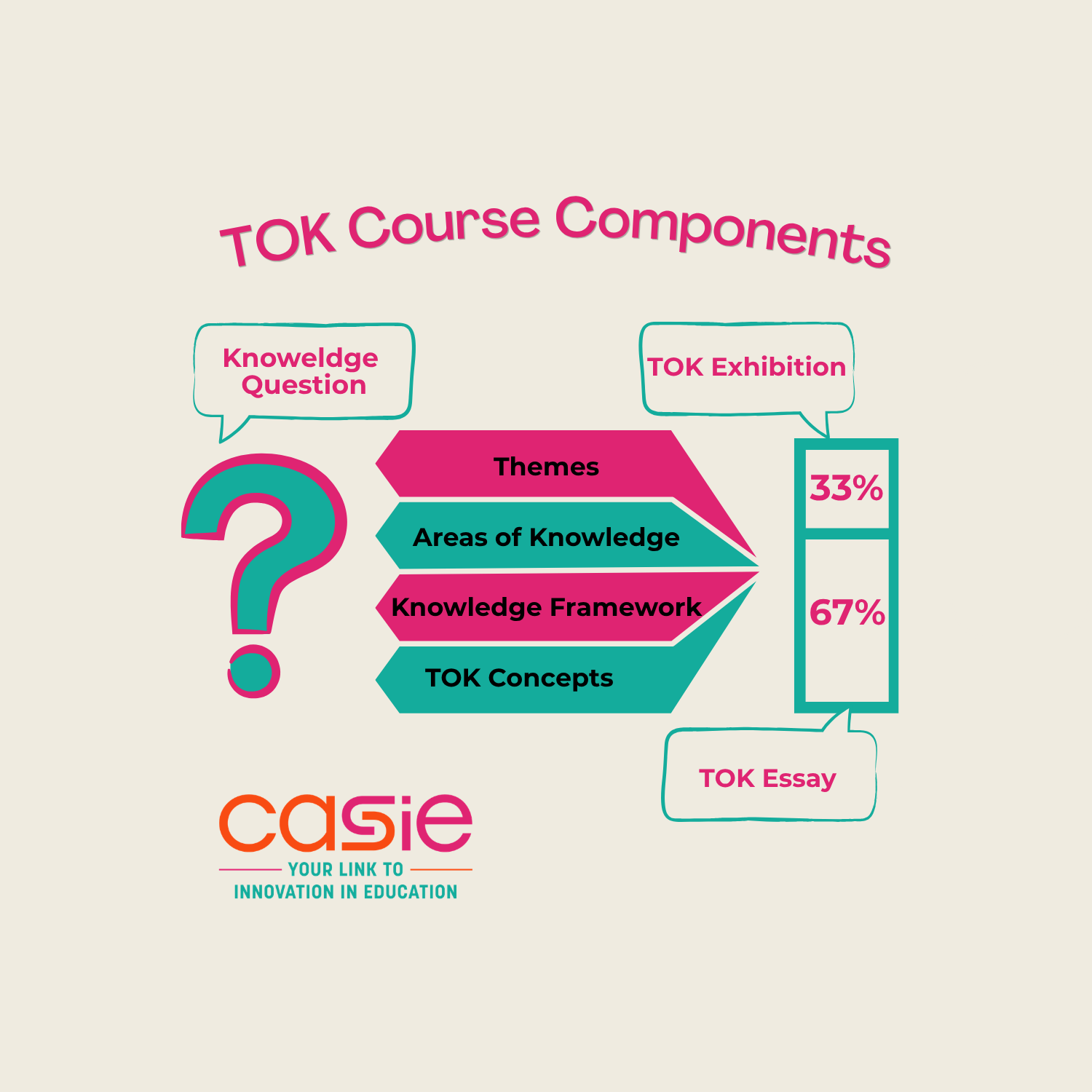
The DP curriculum is disciplinary in nature and aims to develop breadth and depth of knowledge in students. Six subject groups and the DP core, theory of knowledge (TOK), creativity, activity, service (CAS), and the extended essay, are the distinguishing elements of the DP curriculum. Reflecting on the nature of knowledge, completing independent research, and community engagements are specific processes of the DP.
Career-related Programme (CP), Ages 16-19
The CP curriculum utilizes an international education framework and IB philosophy to develop learners that choose a career-related education pathway. Three core components make up the CP, at least two DP academic courses related to their career pathway, the four-part CP core, (personal and professional skills, community engagement, reflective project, and language and cultural studies), and career-related studies.
Benefits of the IB Curriculum
The benefits of the IB curriculum are rooted in its mission statement, which expresses the aim of developing inquiring, knowledgeable, and caring young people who contribute to a more peaceful world through intercultural understanding and respect. The IB brings this mission to life by nurturing students to embody the attributes of the learner profile: to be balanced, reflective, inquiring, caring, knowledgeable, communicative, principled, open-minded, risk-taking, and thoughtful. The IB’s programme standards, practices, and curriculum design framework all work together to guide this process toward its broader philosophical goals.
Developing Critical Thinking and Global Citizenship
The IB curriculum fosters critical thinking skills within a global perspective. The IB has defined international-mindedness and the characteristics of a global citizen with the traits of the IB learner profile traits. The kind of teaching that would contribute to the development of a global citizen and the defined these traits correlates to an inquiry approach to understanding concepts in local and global contexts. Inquiry-based, conceptual teaching and learning is achieved through the utilization of the IB programmes’ curriculum designing processes, tools, and frameworks. With crafted provocations, students are encouraged to become critical thinkers through invitations to consider central ideas to formulate their own questions, wonderings, and reflections about the concepts or posed unit defining question/statement. Students are led to construct knowledge using these questions and wonderings to fuel the exploration of the problem or possible solutions in various contexts. The inquiry process is a cycle of inquiry, action, and reflection. Inquiry in collaborative activities like using protocols, seminars, problems of practice, and routines that support and promote thinking, discussion, experimentation, question formulation, deeper understanding, reflection, perspective taking, thought sharing, research, evidencing, and making of connections, cultivate learners to become communicators, reflective thinkers, knowledgeable, caring inquirers, and open-minded risk-takers. These are the abilities necessary to think critically as a global citizen.
Preparing Students for Higher Education and Beyond
The IB curriculum is intentionally significant, engaging, challenging, and relevant. In the June 2024 Research Summary document, “Postsecondary outcomes of International Baccalaureate Diploma Programme graduates in the United States”, this statement can be found, “Previous research has found that International Baccalaureate (IB) Diploma Programme (DP) graduates enroll, persist and graduate from college at higher rates than students who did not participate in the DP (Pilchen et al., 2020; Bergeron, 2015; Halic, 2013; Caspary, 2011).” In the document, “International Baccalaureate students studying at UK higher education institutions: How do they perform in comparison with A level students?”, we find this statement, “Results showed that IB diploma students, qualifiers and leavers fared significantly better than their A level peers on several indicators of higher education success.”
The January 2024 research summary entitled, “Australian DP students consistently outperform non-DP students nationally on post-secondary outcomes” states, “The study indicates that across all cohorts, DP students gain offers of university admission, continue to their second year of study, and complete university for all check points examined within the study (4 years, 6 years and 9 years after commencement) at significantly higher rates than non-DP students.”
These reports and others like them, reveal the success of DP students in postsecondary educational settings. Additional data in research about the readiness for IB students for postsecondary experiences are available on the IB’s website. This data highlights the advantages that an IB education affords students in acquiring the knowledge and skills needed to achieve their educational goals.
Implementing the IB Curriculum: Challenges and Solutions
Implementation of any curriculum has unique challenges. The IB has the My IB digital platform to provide guidance and support documents to address possible hurdles by programme and across the programmes. The Programme Resources Centre, IB Exchange, IB Answers, and Programme Communities are all helpful for navigating challenges that may be faced along the IB journey. Additionally, there are supportive webpages on the IB’s website such as the Free Learning and Digital Toolkit pages.
Challenges Faced by Schools and Educators
In the research document, “Exploring the challenges and best practices in curriculum development and implementation within the IB framework” by Tahir Mehmood (2022), there exists a list of challenges that are faced when implementing the IB. Teacher preparedness, resource constraints, assessment and evaluation, and cultural and contextual adaptation are identified as challenges. A list of best practices that can be used as strategies to overcome the challenges include collaborative planning, ongoing professional development, resource optimization, and robust assessment strategies. These processes can be addressed in conjunction with the school’s context, their strategic and programme development planning.
CASIE’s Role in Supporting IB Implementation
CASIE has resources and services that can assist schools in implementing the IB curriculum effectively. As a partner IB workshop provider, CASIE offers in-person and virtual IB workshops to meet the varied needs of schools. CASIE also offers Tailored Consulting professional development to schools and districts that is flexible and totally customizable to be single, multi-event, or ongoing consultations that build capacities to implement the elements of an IB curriculum with greater fidelity. The CASIE Presents events like Exploring the Inquiry Mindset: Cultivating Cultures of Curiosity with Trevor MacKenzie are helpful to grow educators in their ability to deliver IB approaches to teaching.
Case Studies: Success Stories of IB Implementation
IB has a section on their website devoted to sharing success stories that have resulted from IB curriculum and programme implementation. “IB World School success stories” reveal the impact of various schools’ IB journeys and can be found in the Digital Toolkit on their website.
Global Impact of the IB Program
IB World Schools around the world have had a positive impact on students. The IB has published a collection of success stories on their website. Here are a few highlights from several of these stories.
- The District 13 in New York, USA, has been partnering with the IB to implement the PYP and MYP in seven of its elementary and middle schools since 2021. In the partnership’s case study’s executive summary, it was noted that there were “positive changes in student outcomes, classroom behavior, teacher job satisfaction and parent engagement.”
- The DP coordinator at Al Najah Private School, United Arab Emirates stated, “Students do not absorb and repeat content, in the style of rote learning. Instead, they analyse, reflect and think critically,” because of the IB programme.
- The school principal at British International School Istanbul had this to say about IB’s impact on their school, “The attitude to challenges and situations that the IB instills in our students and staff is invaluable.”
- The principal of International College Spain in Madrid, Spain shared this reflection about the impact of the IB, “As an IB continuum school; it’s easy for us to spot the positive correlations between the programmes, and we know that a skill such as critical thinking, continually develops from the PYP all the way through to the DP.”
The Future of Education with the International Baccalaureate
On their Competencies of the Future webpage, the IB has listed, analytical thinking, critical thinking, creative thinking, ethical thinking, student agency, and intercultural understanding as an “initial set” of competencies for the future. They partner with various organizations to conduct literature reviews in general to ensure current best practices are in place. This specific project has literature reviews summaries for each competency conducted by the Center for Assessment. The IB continues to review all four programmes with a future focused lens. They have ongoing projects and updates for each programme and the IB continuum as a whole.
Engaging with CASIE for IB Success
CASIE seeks to expand innovative practices that educate for active global citizenship. Working for the success of your IB programme(s) requires each IB educator to be equipped with the knowledge and skills to design IB curriculum. There are an array of capacity building opportunities with CASIE through workshops, events, resources, and consultations. These services are available to support the professional development needs of IB schools and build overall IB programme growth.